

CP3019-20AC Standard Head Height Die Grinder vs. CP3019-20AF Low-Profile Disc Sander: Which Is Right for Your Application?
Posted by Bill Sorensen on 17th Dec 2025
If your workers need dependable performance in metalworking, fabrication, or maintenance environments, the Chicago Pneumatic CP3019 is the go-to series for durability, ergonomics, and power. Within this family, two popular options—the CP3019-20AC compact die grinder and the CP3019-20AF low-profile disc sander—offer distinct capabilities tailored for different types of finishing, blending, and material removal work.
While both tools deliver 0.5 HP and 20,000 RPM and feature the industrial-grade construction expected from Chicago Pneumatic, their designs differ significantly. And those distinctions directly affect versatility, ergonomics, and precision. Below is a detailed comparison to help you decide which tool best fits your shop's requirements.
CP3019-20AC: Standard Right-Angle Die Grinder with 1/4" Collet
What It Is Built For
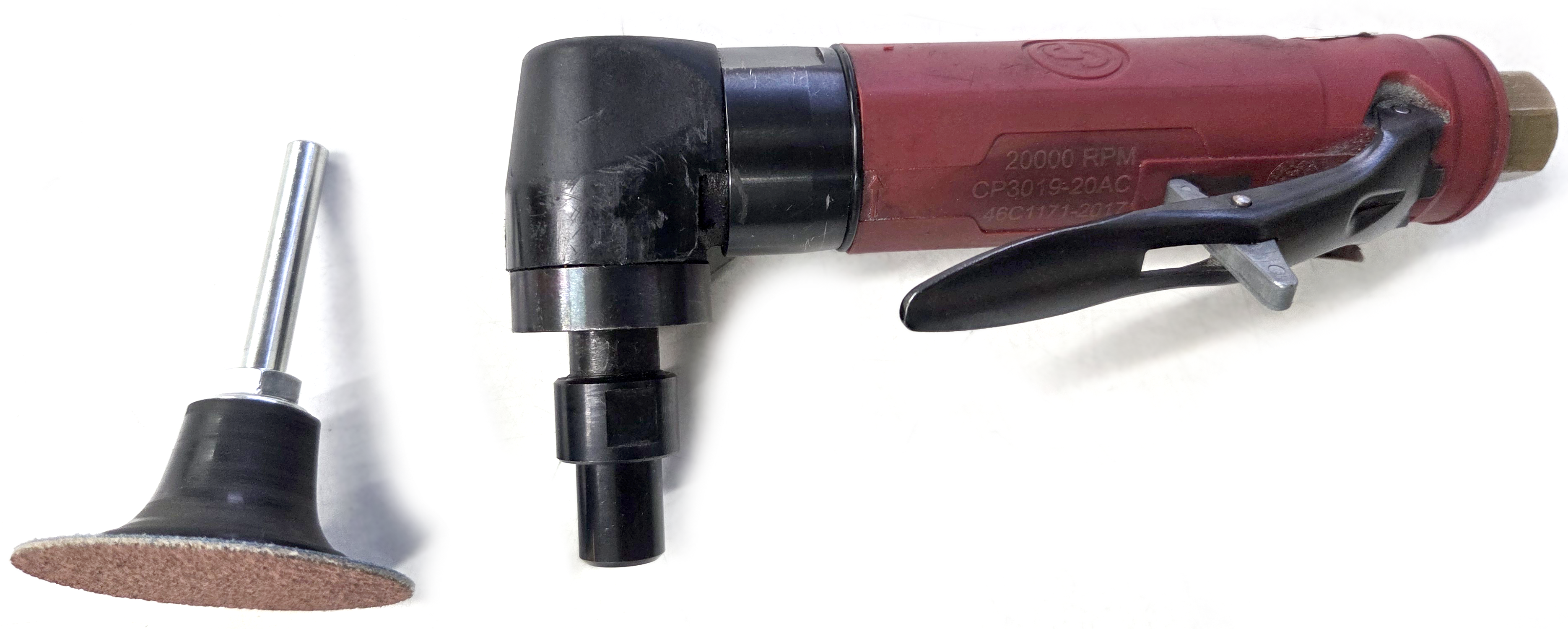
The CP3019-20AC is a compact, right-angle die grinder designed for versatility. Its 1/4" collet allows operators to run a wide range of abrasive attachments—making it a workhorse for deburring, surface prep, grinding, and general maintenance.
Key Advantages
- Supports a Wide Variety of Accessories
With a standard 1/4" collet, this die grinder accepts:
- Quick-change surface conditioning discs (Rol-Locs)
- Carbide burrs
- Mounted points
- Small flap wheels and more
Because of its flexibility, the 20AC is ideal for shops that frequently switch between material removal and finishing tasks.
- More Robust and Rigid Setup
A collet-based system offers excellent rigidity by reducing vibration and helping maintain stable contact with the workpiece. This is especially valuable when precision grinding or shaping hardened materials.
- Less Runout and Better Concentricity
When compared to threaded-pad disc sanders, the collet design results in:
- Lower runout
- Smoother operation
- Longer accessory life
- Improved accuracy when using burrs or other precision tools
Operators who rely on consistent, predictable cutting action, the CP3019-20AC delivers superior control.
Disadvantages
- Taller Head Height
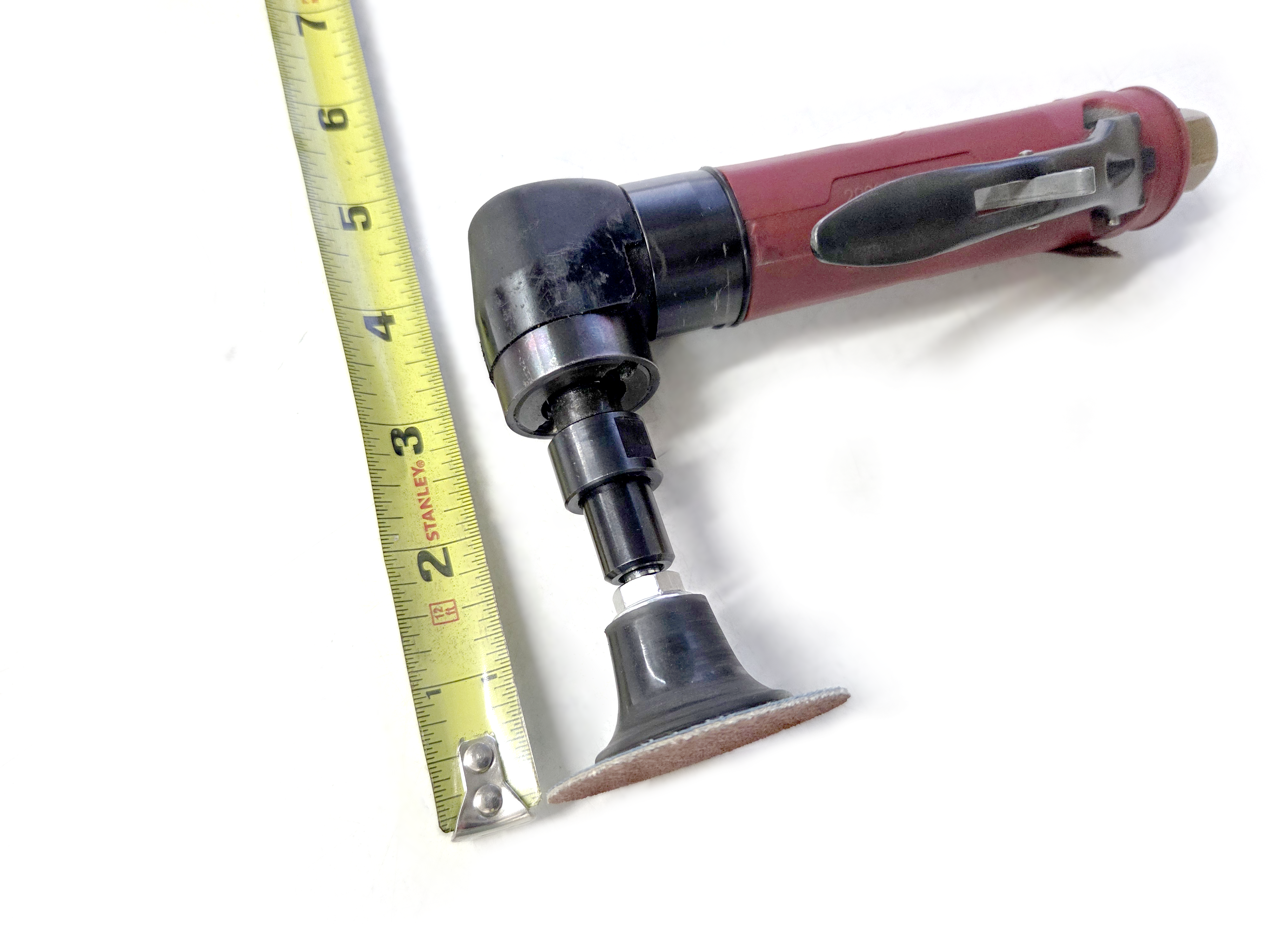
When paired with a Rol-Loc holder or carbide burr, the tool's head height increases. This can make it harder to access tight spaces or confined geometries—one of the main reasons some users switch to a low-profile disc sander.
- Requires Periodic Collet Replacement
Collets wear over time, especially under heavy use or when tools are frequently changed. Since worn collets can increase runout and impact safety, they require regular maintenance.
- Accessory Changes Require Two Wrenches
Swapping attachments typically requires:
- A wrench for the collet nut
- A second wrench to hold the spindle
While it's not difficult, this slows down changeovers when compared to threaded-pad tools.
CP3019-20AF: Low-Profile Angle Disc Sander with 1/4"-28 Thread
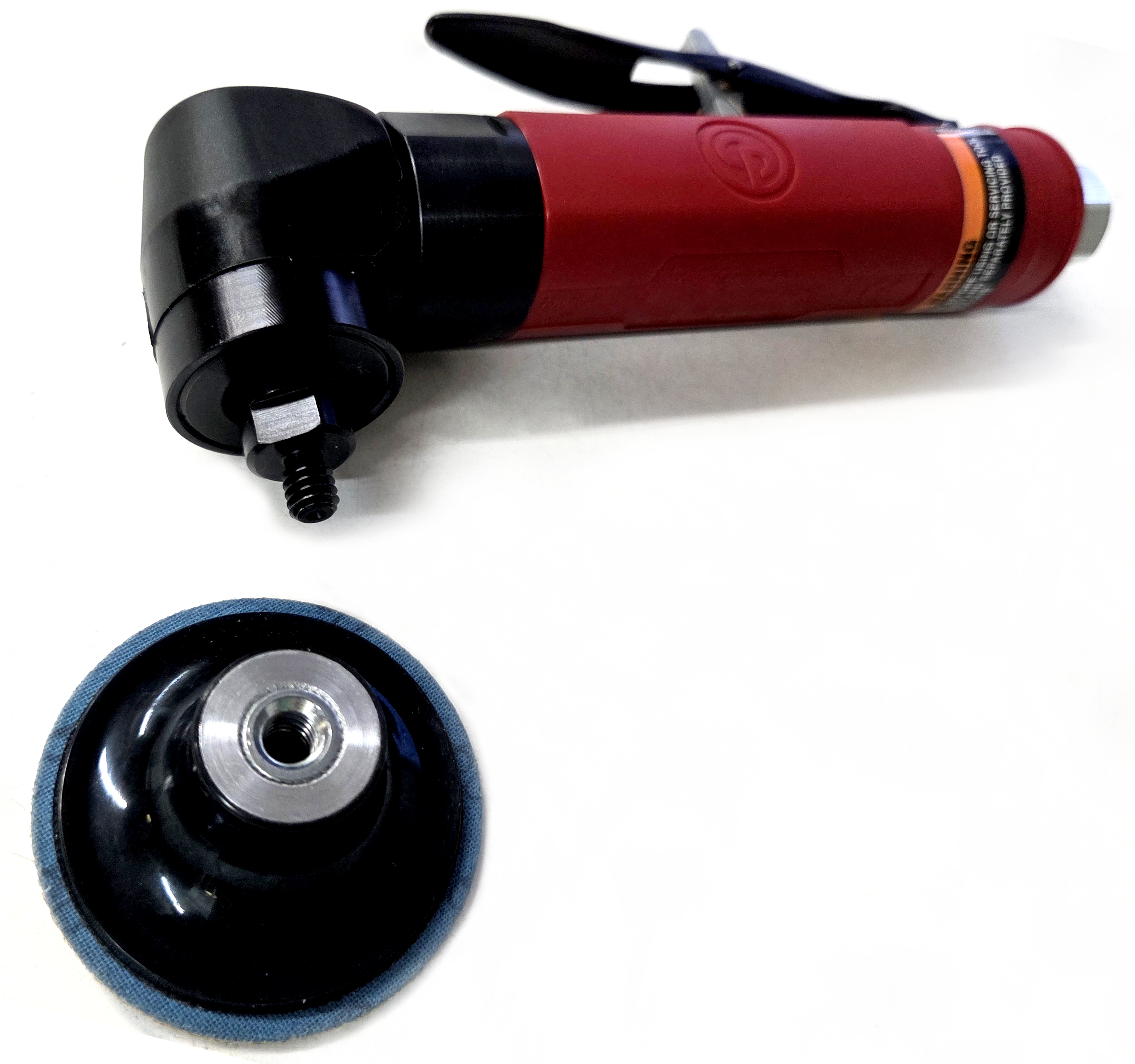
What It Is Built For
The CP3019-20AF is a compact, low-profile angle sander, which is ideal for preparing and finishing surfaces in tight spaces. The collet is replaced by a 1/4 "-28 threaded spindle that allows backing pads to thread directly onto the tool.
Key Advantages
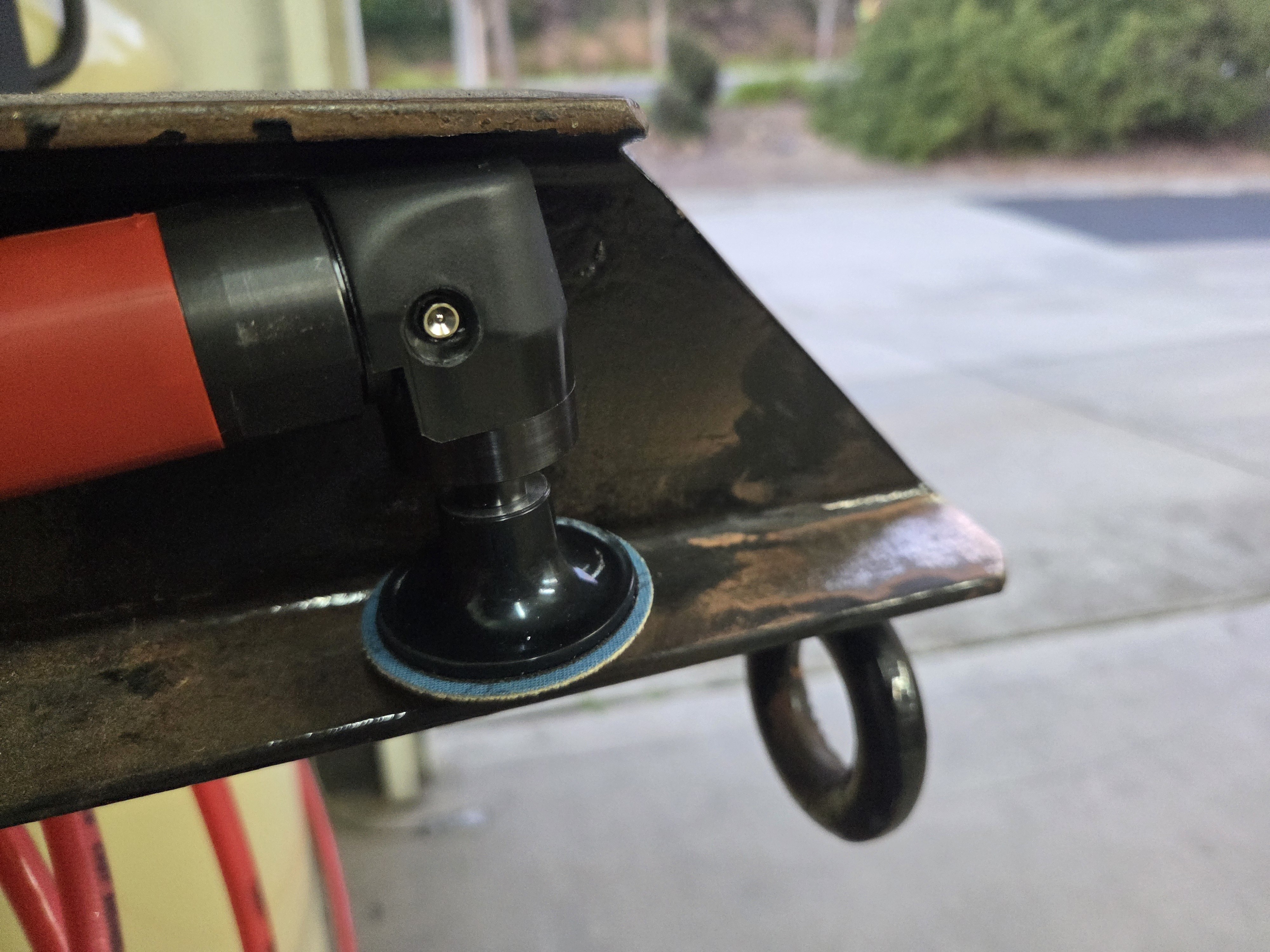
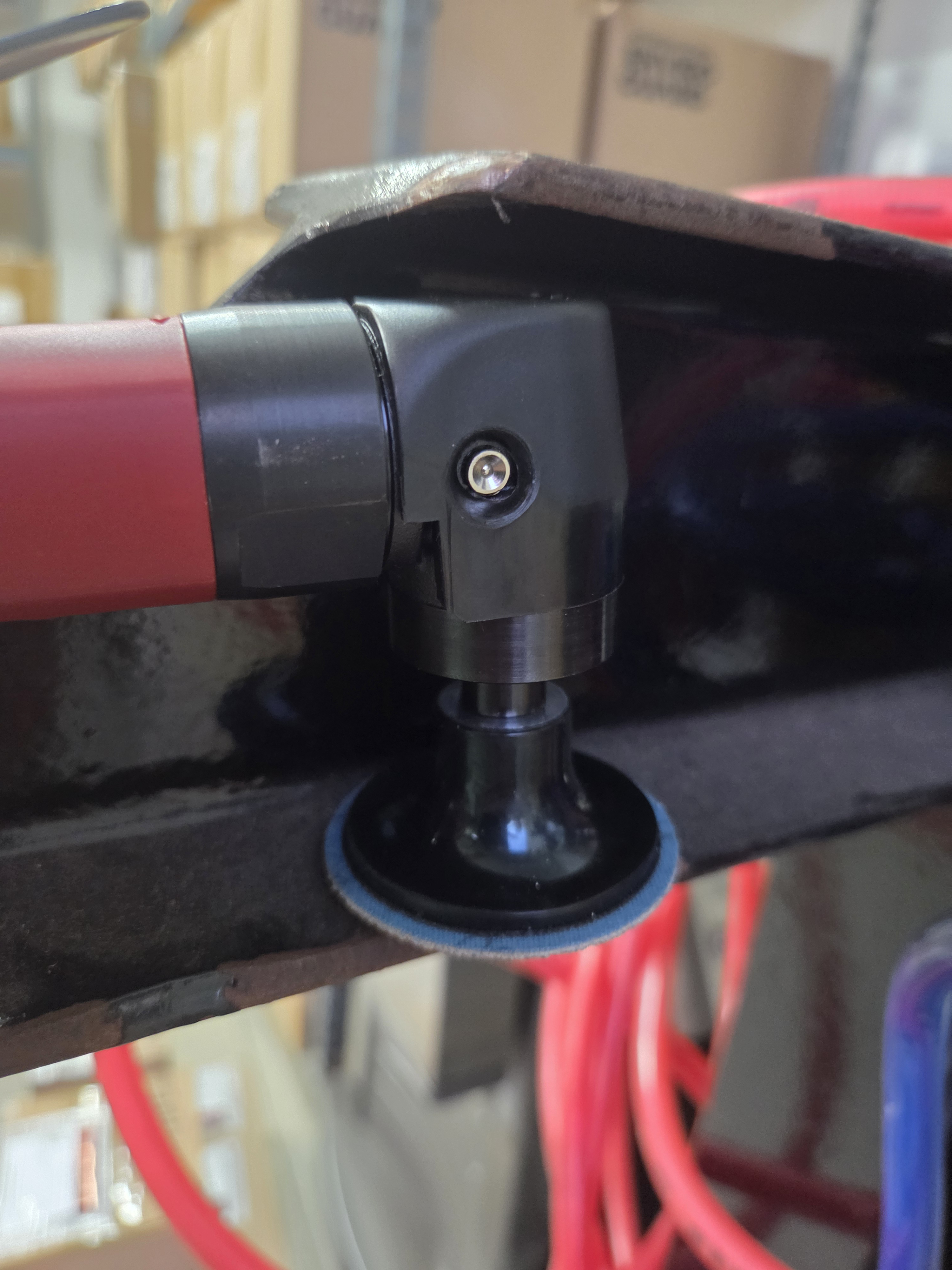
- Extremely Low Profile
The short head height is the most significant benefit. Operators can easily reach:
- Tight corners
- Recessed pockets
- Complex weldments
- Hard-to-access machine features
These features make the CP3019-20AF an excellent choice for aerospace, mold work, general finishing, and other applications where clearance is limited.
- No Collets to Replace or Maintain
Because the backing pad threads directly onto the spindle:
- There's no collet wear
- No risk of collet slippage
- Maintenance requirements are reduced
This simplicity improves ease of use and reduces long-term operating costs.
- Fewer Wrenches Needed
Changing pads is quick—usually requiring only one wrench, or in many cases, none at all if you use a hand-tightened pad. This is a significant benefit for technicians who frequently change abrasives during multi-step finishing processes.
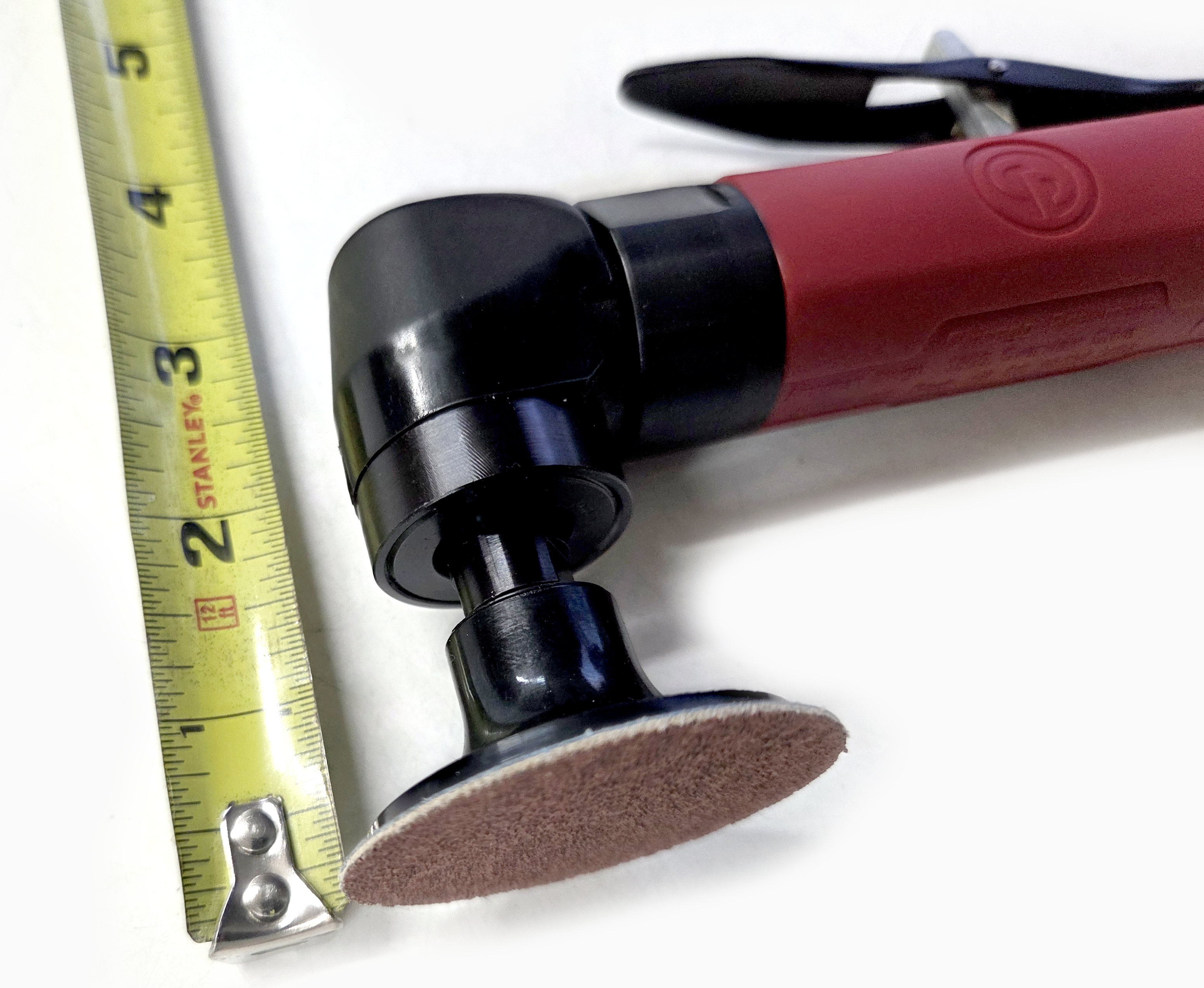
Disadvantages
- Restricted Use
Threaded pads limit the tool to sanding and surface conditioning. You must choose another tool, such as the CP3019-20AC, if you need carbide burrs to remove significant stock or for detail grinding.
- More Runout and Less Rigidity
Threaded-pad systems lack the clamping stability of a collet. As a result:
- Runout is typically higher
- The concentricity is lower
- Heavy pressure can cause flex or vibration
For precision grinding or aggressive material removal, this may compromise results.
Comparison Table
|
Feature |
||
|
Tool type |
Compact right-angle die grinder |
Low-profile angle disc sander |
|
Power |
0.5 HP |
0.5 HP |
|
Speed |
20,000 RPM |
20,000 RPM |
|
Connection type |
¼” collet |
¼”-28 threaded spindle |
|
Profile |
Standard height; taller with Rol-Loc Holder or burrs |
Short, low profile for tight access |
|
Supported accessories |
Quick-change discs, carbide burrs, flap wheels |
Threaded backing pads only |
|
Run carbide burrs? |
Yes |
No |
|
Rigidity/concentricity |
High rigidity, minimal runout, very concentric |
Less rigid and more runout than collets |
|
Versatility |
High: grinding, deburring, shaping, and finishing |
Moderate: focused on surface prep and finishing |
|
Ease of accessory changes |
Requires two wrenches |
Easy pad changes |
|
Maintenance requirements |
Collets wear. Must be replaced periodically |
No collets. Minimal spindle maintenance |
|
Best for |
Precision grinding, burr work, metal removal, and multi-tool versatility |
Tight-access finishing, surface conditioning, and low-profile applications |
|
Limitations |
Taller head, slower changes, and collet upkeep |
Cannot run carbide burrs. Lower precision with runout |
Conclusion
Both of these Chicago Pneumatic CP3019 tools will deliver professional-grade performance, but they excel in different roles. The CP3019-20AC die grinder offers greater versatility, rigidity, and precision—making it the best choice for demanding metal removal and multi-purpose use.
Meanwhile, the CP3019-20AF disc sander is excellent for finishing jobs that require low profile, quick changeover, and ease of use.
You need to choose the right tool for the job, but understanding these crucial differences will help you get the most work done and achieve the best performance from your pneumatic setup.